

Biafran Prime Minister, Simon Ekpa's arrest in Finland raises concerns in the US
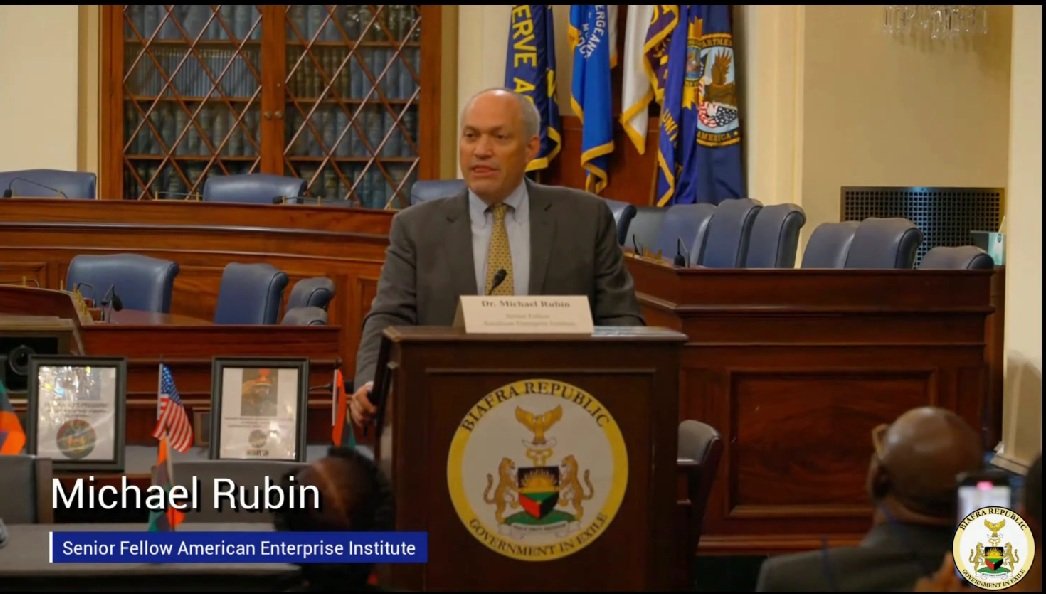
Michael Rubin, a Former U.S government official at the Pentagon
Written By Nnamdi Iheukwumere
The arrest of Biafran leader, Simon Ekpa in Finland has sparked debates, with a former U.S. government official criticizing Finnish authorities for allowing the arrest.
Following Ekpa’s arrest, Michael Rubin, a former U.S. government official attached to the Pentagon and a senior fellow at the American Enterprise Institute, criticized Finnish authorities for their handling of the case.
According to Rubin, it was unfair for the Finnish authorities to arrest Ekpa when all he sought was ‘freedom’ for his people. He accused Finland’s judiciary and its foreign ministry of allowing scammers and human rights abusers to weaponize its judiciary as a mechanism for transnational repression and harassment.
“Finland coasts on its reputation of liberalism, human rights, and freedom. When it comes to Africans escaping repression at home, alas, it is a reputation the country no longer deserves.” He said.
Simon Ekpa's Imprisonment in Finland Continues to Fuel International Debate and Internal Shifts in Biafran Movement. In a case that has drawn sharp international scrutiny, Simon Ekpa, the Finnish-Biafran activist and Prime Minister of the Biafra Republic Government in Exile (BRGIE) nowm known as United States Of Biafra government (USBG) remains incarcerated following his September 2025 sentencing to six years in prison by Finland's Päijät-Häme District Court. Convicted on charges of terrorism-related offenses, aggravated tax fraud, and breaches of the Attorneys Act.
Ekpa's case has not only highlighted tensions in Biafra’s independence movement but also raised alarms about potential transnational repression. Initially sparking concerns in the United States through criticisms from former Pentagon official Michael Rubin, the saga has evolved with new developments, including an ongoing appeal, and a leadership shakeup within the BRGIE as of January 2026.
Background: From Arrest to Sentencing EKpa, a dual citizen who rose to prominence after the 2021 extraordinary kidnap of Nnamdi Kanu from Kenya, was arrested in Finland in November 2024. Prosecutors accused him of inciting violence via social media and promoting Biafran independence through an allegedly unlawful means between 2021 and 2024. The court found these actions constituted participation in a terrorist group and public incitement to crimes with terrorist intent, erroneously linking his online campaigns to unrest that reportedly caused significant loss of life and disruption in the region.
Conversely, Rubin, a senior fellow at the American Enterprise Institute, lambasted Finnish authorities for enabling "scammers and human rights abusers" to misuse the judiciary for harassment, arguing that Finland's once-sterling reputation for liberalism and human rights has faltered, particularly toward Africans fleeing repression.
This U.S.-based critique underscored broader worries about how extradition and legal processes might be weaponized against dissidents.
Recent Developments: Since the sentencing, Ekpa has appealed the decision, with filings confirmed by the East Finland Court of Appeal in October 2025. However, according to the appeal courts Judge, hearings are not scheduled until at least April or May 2026.
Pro-Biafran voices continue to frame Finland's actions as a betrayal, given the Nordic nation's historical support during the 1967-1970 Biafran War.
Transnational Justice and the Future of Biafran Aspirations: Ekpa's case exemplifies the challenges of balancing free speech, self-determination, and counterterrorism in a globalized world. Rubin's intervention suggests growing U.S. interest in how allied nations handle dissidents, potentially influencing diplomatic relations.
For Finland, the criticism risks tarnishing its image as a human rights beacon, especially if the appeal uncovers procedural flaws. Within the Biafran movement. Yet, with Nigeria's government inhumane approach against secession and ongoing government orchestrated violence in the North against Christians and in the south against Biafrans, the path to resolution remains fraught. As the appeal looms, this story serves as a reminder that the quest for Biafran independence—rooted in historical grievances—continues to reverberate far beyond Nigeria's borders, demanding nuanced international engagement to prevent further escalation.