

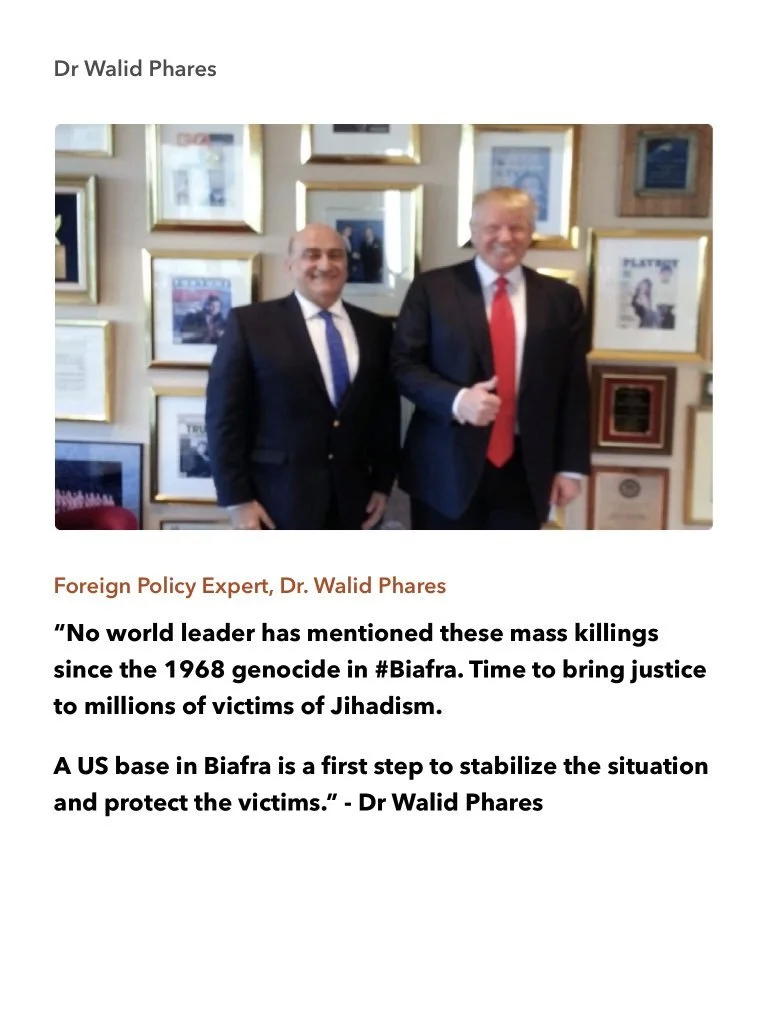
A US base in Biafra is a first step to stabilize the situation and protect the victims." - Dr. Walid Phares @WalidPhares
Written By Nnamdi Iheukwumere
In a world quick to rally against distant injustices, the ongoing slaughter of Christians in Nigeria has been met with deafening silence from global leaders—until now. President Donald Trump's stark warning in January 2026, threatening further U.S. strikes against jihadist groups like Boko Haram, has thrust this crisis into the spotlight.
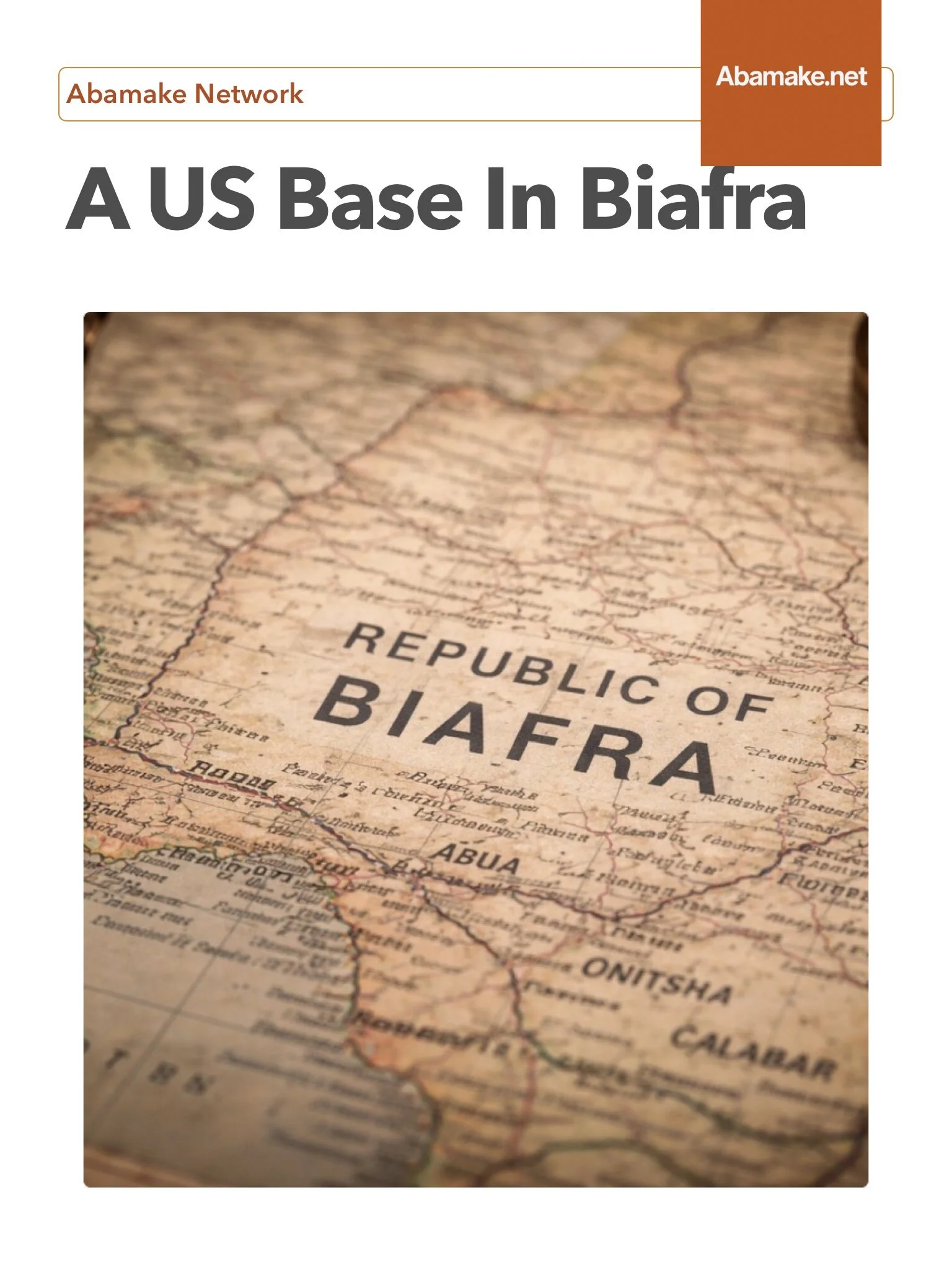
Echoing this urgency, foreign policy expert Dr. Walid Phares has called attention to the unaddressed mass killings since the 1967-1970 Biafran War, proposing a bold solution: establishing a U.S. military base in the proposed "United States of Biafra" in south of the current Nigeria. This idea, deserves serious consideration as a means to protect vulnerable populations, deter terrorism, and bring long-overdue stability to a fractured region. The roots of this tragedy trace back to the Biafran War, a brutal conflict that saw the Republic of Biafra fight for independence from Nigeria amid ethnic and religious tensions. Between 1 and 3 million Igbo people, predominantly Christians, perished—many from starvation caused by a federal blockade that sealed off the enclave.
Advocates have long labeled this a genocide, pointing to deliberate policies that targeted civilians, including massacres and the denial of humanitarian aid.
The war's end in 1970 did little to heal these wounds; instead, it entrenched divisions, with Igbo communities facing ongoing marginalization. As Phares notes, no world leader has meaningfully addressed these atrocities in the decades since, allowing jihadist violence to fester unchecked.
Fast forward to today, and the crisis has escalated into a modern-day horror. In 2025 alone, over 3,400 Christians were killed in Nigeria, accounting for 72% of global Christian deaths due to faith-based violence, according to Open Doors reports.
Boko Haram and affiliated groups, including Fulani militants, have targeted Christian villages in the Middle Belt and north, displacing millions and claiming over 21,000 civilian lives since 2020.
These attacks are not random; they carry a religious dimension, with jihadists explicitly aiming to eradicate Christian communities.
Yet the Nigerian federal government has failed—to curb this threat, prompting international scrutiny. Trump's redesignation of Nigeria as a "Country of Particular Concern" for religious persecution underscores this failure, with U.S. officials now drafting plans for sanctions, intelligence sharing, and potential military engagement.
Phares' proposal for a U.S. base in the Biafra region—specifically mentioning Port Harcourt as a strategic hub—offers a pragmatic path forward. Such a presence would enable rapid strikes against Boko Haram, facilitate humanitarian aid from American churches, and provide a deterrent against further massacres.
It aligns with Trump's escalatory options, from "partner-enabled" operations supporting Nigerian forces to more direct interventions.
Proponents, including Biafran Government and diaspora groups, see it as a lifeline for self-determination, echoing the war-era calls for protection amid perceived federal indifference.
On X, discussions amplify this sentiment, with users advocating for Biafran freedom as the ultimate safeguard against jihadism.
The Nigerian military's track record includes operational mishaps that harm civilians, highlighting the need for professionalization through a two state solution.
A base could foster such collaboration without full invasion, offering "carrots" like aid incentives alongside targeted pressure. Skeptics may decry this as neo-colonialism, but the reality is stark: jihadist groups thrive in Nigeria's security vacuum, and the international community has a moral imperative to act. Phares is right—leaving millions unprotected is not an option.
Establishing a U.S. base in Biafra isn't just about military might; it's about justice for the victims of a forgotten genocide, addressing the issue of self-determination and a step toward a more secure West Africa. President Trump and Congress should move swiftly to explore this proposal, balancing intervention with diplomacy. The time for silence is over; the time for action is now.