PHILIP EFFIONG’S 1970 STATEMENT CARRIES NO VOTE -BIAFRA GOVERNMENT
The People’s Choice: Biafrans Affirm Sovereignty, and MNK Stands with Them
Biafrans have made their choice. Mazi Nnamdi Kanu (MNK), leader of the Biafra Government, is aware of it and is satisfied with it. That choice is the restoration of the sovereign Republic of Biafra, rooted in the will of the people rather than colonial imposition or military fiat. The principle is straightforward: the people decide.
1967: A Mandate to Leave
On May 30, 1967, Chukwuemeka Odumegwu Ojukwu proclaimed the independence of the Republic of Biafra. In his declaration speech he stated that the people of Eastern Nigeria had “mandated me to proclaim on your behalf, and in your name,” that the territory be a sovereign independent republic.
Contemporary reporting noted that the Eastern Region’s Consultative Assembly had voted to authorize secession. This was the formal expression of the regional leadership and the people it represented after the massacres of 1966, the collapse of the federal structure, and the breakdown of negotiations. Biafrans voted, through their mandated representatives, to leave Nigeria.
No equivalent popular or representative vote ever brought Biafrans into Nigeria. The 1914 amalgamation of Northern and Southern Nigeria was a British colonial administrative act. Independence in 1960 inherited those colonial boundaries and structures. There was no referendum in which the peoples of the East (or other regions) freely chose to form or join the Nigerian state.
1970: A Concession , Not a Vote
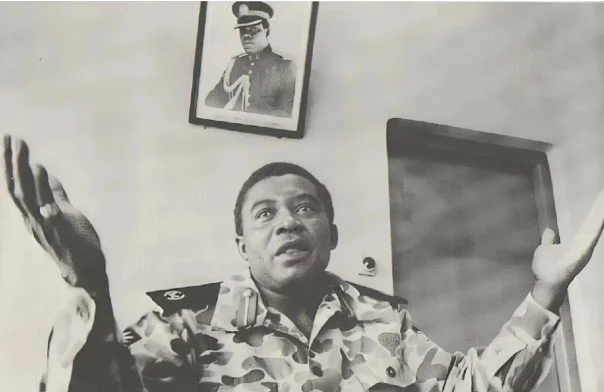
The war ended in January 1970 with the statement of Philip Effiong, then administering the Biafran government after Ojukwu’s departure. Effiong declared that Biafrans accepted Nigerian authority. This was a military concession under conditions of blockade, starvation, and imminent collapse.
It carried no popular votes, no assembly mandate, and no expression of the people’s will. It was the act of a military leadership seeking to halt further bloodshed, not a democratic decision to rejoin Nigeria. Consequently, it holds no validity as an expression of Biafran consent.
2024: Sovereignty Demonstrated Again
In 2024, Biafrans again demonstrated their position through a self-referendum organized under the Biafra Republic Government in Exile (BRGIE).
The process ran from February to late November and recorded claims of roughly 50 million votes in favor of restoring the independent state of Biafra (with a negligible “no” total).
On 29 November 2024 the restoration was declared, with the capital designated Ebube. While the exercise was self-organized rather than UN-supervised and has been criticized by some groups it stands as a further public expression of the desire to leave Nigeria.
MNK’s consistent public position has been that the future must be decided by the people themselves through a free vote—specifically a referendum on independence—or by the unilateral pursuit of Biafran sovereignty. There is, in his stated view, no middle ground that bargains away the homeland. He has repeatedly emphasized that the popular will, not elite preferences or external arrangements, is decisive. The people’s continued affirmation of that choice aligns with the stance he has maintained.
Every Monday: Ongoing Demonstration
Biafrans continue to demonstrate their claim to sovereignty every Monday through the sit-at-home observance across the Southeast. What began as a protest action has become a recurring, visible assertion of distinct political will and the capacity to organize collective action outside Nigerian state structures. It is not merely symbolic; it repeatedly shows that a significant portion of the population treats Biafran self-determination as an active, living project rather than a historical footnote.
The People Decide